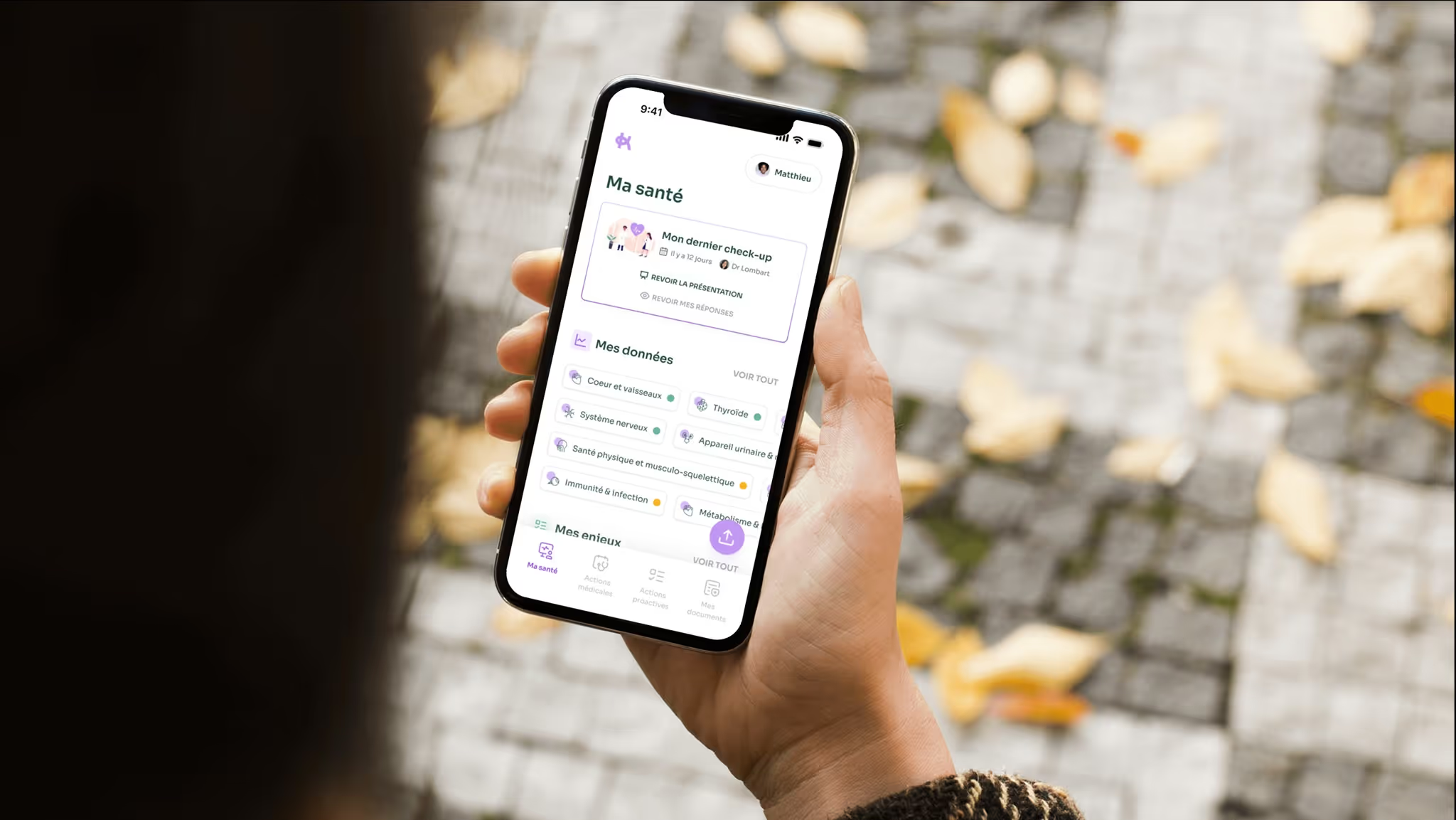
Health check-ups, long reserved for executives and COMEX members, are now available to all employees.
This development makes them a key asset in corporate health and well-being strategies.
The benefits are significant: reduced absenteeism, improved engagement, and increased performance.
According to Perrine Dufros, HRD at Ipsos, these health assessments are now the "new standard" in business.
So, why and how should you integrate health check-ups into your organization? We'll explain everything.
What is a health check-up?
A health check-up (or health assessment) is a comprehensive evaluation of an individual's health status through the combined analysis of cross-sectional, self-reported, and/or medical health data. A health assessment provides the tools to manage one's health daily and prevent illnesses.
An effective health assessment doesn't stop at delivering results. To have a real impact, it must be accompanied by structured follow-up that allows for tangible action on one's health. Identifying risks or areas for improvement is a first step, but without appropriate support and recommendations, change remains difficult. The true value of a check-up lies in establishing new habits and tracking progress. A health check-up is not an end in itself, but a gateway to better health.
Why offer a health check-up to your employees?
1️⃣ A way to improve your company's performance 🚀
A company's performance is inextricably linked to that of its employees, and their health is a key driver. Ignoring this issue risks a decline in efficiency and a direct impact on productivity. Conversely, by enabling employees to better understand their bodies and needs, they can immediately improve their well-being, thereby preventing fatigue, illness, and performance loss. Investing in employee health means preserving the company's competitiveness.
A sleep debt of 45 minutes can lead to a 5 to 10% decrease in cognitive abilities.
2️⃣ A tool to reduce absenteeism 📊
Absenteeism in companies incurs a significant cost, estimated at 4,000 euros per year per employee (Institut Sapiens, 2018), of which 85% of sick leaves are due to illnesses (Ayming, Absenteeism Barometer, 2024). By integrating a health check-up into its HR policy, a company can act proactively to prevent these absences and thus reduce their financial and organizational impact.
The health check-up contributes to reducing absenteeism in two complementary ways.
- Through primary prevention, it allows employees to identify their risk factors even before the onset of an illness, thereby reducing sick leaves. For example, an employee informed about the risks associated with diabetes can adapt their diet and physical activity to prevent its development.
- Through secondary prevention, the health check-up facilitates the early detection of diseases, thereby reducing their impact on health and the duration of sick leaves. For breast cancer, for example, an early detection increases the chances of a localized diagnosis, limiting the burden of treatments and the need for invasive procedures such as lymph node dissection. Conversely, a more advanced condition could result in up to two years of absence from work.
3️⃣ A lever to strengthen employee engagement 💪
Since the health crisis, employee expectations have evolved. Beyond salary, they are looking for employers who are committed to their well-being and support their work-life balance. As health is a fundamental element of this fulfillment, more and more companies are adopting a proactive approach with regular health check-ups.
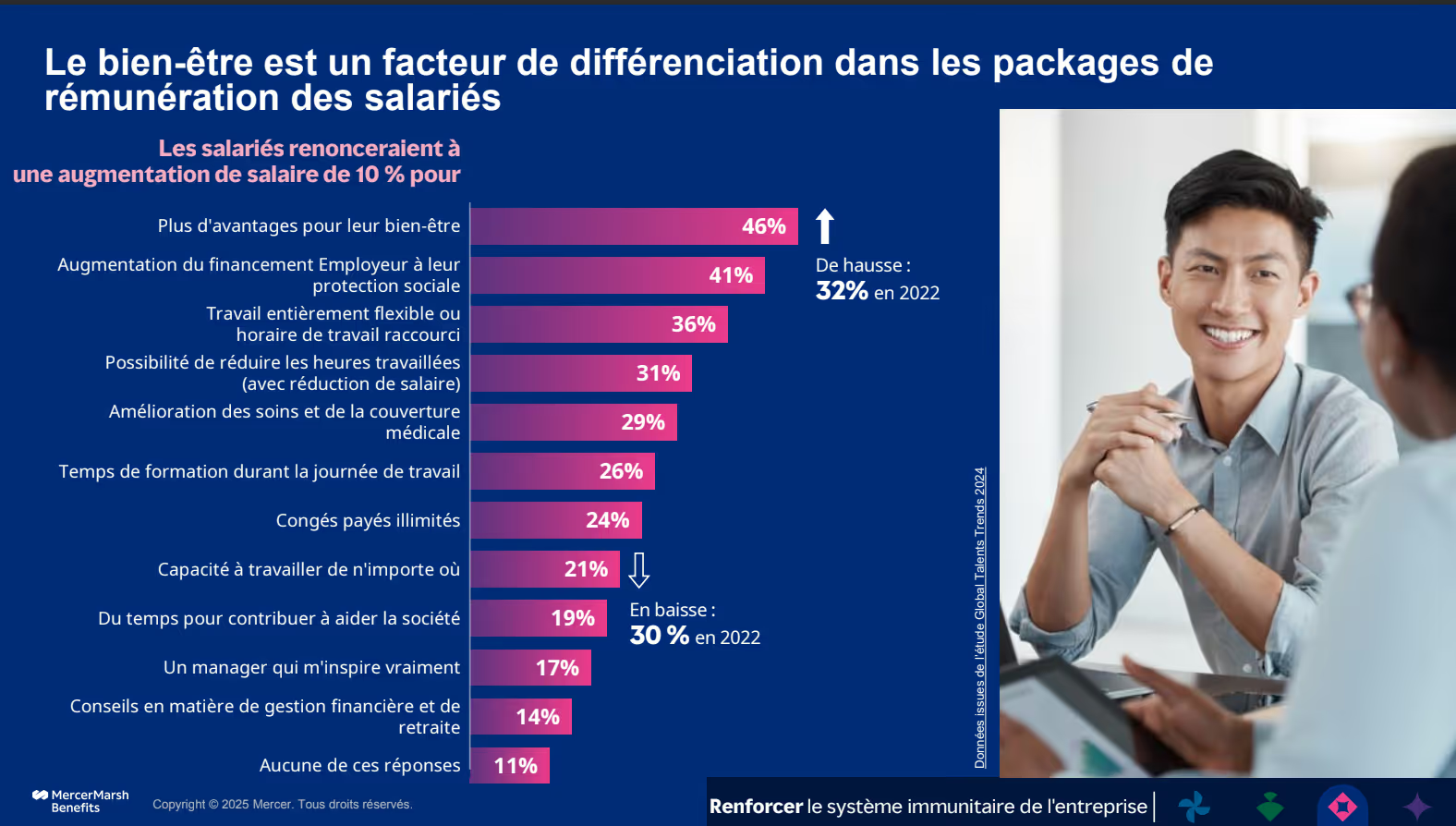
This trend is confirmed by the growing importance employees place on health and well-being benefits: 46% of employees would be willing to give up a salary increase of 10% of their salary in exchange for more well-being benefits, whereas this figure drops to 14% for financial management advice (Mercer, 2025). These figures demonstrate that health and well-being expectations far exceed mere financial considerations.
The impact of such an initiative is measurable: 93% of employees using Kor state that its implementation improves their perception of their employer (study conducted on a sample of 200 employees who used Kor)
👉 Discover Kor health assessments
The different types of health check-ups
Companies today have access to several formats of health check-ups, allowing them to choose the solution best suited to their needs.
📱 Digital check-up: a new generation of health assessments, it offers a flexible and accessible solution for all employees. Based on an online medical questionnaire, it identifies priority health issues from self-reported data, allowing for a comprehensive health evaluation.
A key feature to check for this type of check-up is the ability to include historical medical data, allowing for track the evolution of one's health markers, a crucial element in assessing one's health and adapting recommendations. ⚠️ Not all solutions include it : before choosing a check-up, ensure this history is properly considered. At Kor, we integrate this approach, offering a more comprehensive view and optimized long-term monitoring.
📍 On-site check-up: Your employees can undergo a health assessment, usually focused on a few specific areas (e.g., cardiovascular or dermatological assessment), directly at their workplace, thanks to visiting healthcare professionals. This format, lasting between 15 and 30 minutes, easily fits into employees' workday.
🏥 In-center check-up: the in-center check-up allows employees to undergo a more in-depth medical assessment by visiting a dedicated health center. They will undergo biological analyses as well as cardiovascular, pulmonary, auditory, or ophthalmological examinations. More comprehensive and costly than digital or on-site check-ups, it lasts between 2 hours and half a day and is available in many centers across France.
How to implement health check-ups in your company?
Once reserved for senior executives due to its high cost and limited access, health check-ups have now become more widespread. Thanks to the variety of options now available, check-ups can be implemented in all types of organizations : VSEs, SMEs, mid-caps, and large corporations.
1️⃣ Identify priority strategic objectives
Implementing corporate health check-ups should be part of a strategic approach, aligning them with the organization's HR priorities. Health check-ups can serve a wide variety of objectives:
By integrating check-ups into these strategic objectives, companies strengthen their prevention, inclusion, and quality of life at work policies.
🩺 Offer prevention for all: Integrating health check-ups accessible to all employees to ensure inclusive coverage.
📌 Support employee caregivers: Often under pressure and with little time, employee caregivers struggle to take care of their own health. A flexible check-up allows them to ensure their well-being.
👩🔬 Promoting women's inclusion: Women face specific health challenges (endometriosis, PCOS, menopause, breast cancer). A targeted check-up promotes better care and enhanced inclusion in the workplace.
♿ Valuing and supporting employees with disabilities (RQTH): Employees with Recognized Worker Disability Status (RQTH) have specific monitoring needs. A tailored health assessment helps anticipate and prevent the worsening of certain conditions.
👴 Valuing and supporting seniors: Preventive medical monitoring helps keep seniors active and anticipate age-related health issues, while also facilitating the transition to retirement.
2️⃣ Choosing the most suitable format
Selecting the right check-up is based on three key criteria: the target audience, the available budget, and the bandwidth required for its deployment.
📱 Digital Check-up : Accessible to all, it allows for the deployment of a simple and quick solution with minimal logistics and an affordable budget. It is ideal for reaching a large population, including remote employees or those spread across multiple sites.
🏢 On-site Check-up : Suited for large companies and industrial sites, it makes health assessments accessible without employees needing to travel. However, it requires logistical organization, with a dedicated space to conduct check-ups confidentially.
🏥 In-center Check-up : More expensive, it offers an in-depth evaluation with comprehensive medical examinations. This format is often reserved for specific populations such as senior executives or seniors.
In most cases, companies opt for a mixed approach, combining several formats depending on their needs. The digital foundation is often preferred as a basic solution, allowing broad coverage with minimal logistical constraints, while more in-depth assessments are offered to targeted populations.
👉 Finding the right health assessment for your context
3️⃣ Confirm funding sources
Funding for health assessments can be based on one or more sources, allowing the company to limit its investment while ensuring optimal access to prevention for employees.
🏢 Company : Funding can be directly covered by the company, depending on its financial capacity. The investment is justified by a measurable ROI on reducing absenteeism and improving the employer brand.
🏥 Health / Supplementary Insurance Provider : Some supplementary health and welfare insurance providers already include health check-up offers in their services or allow for negotiation of preferential rates.
💰 HDS / DES Funds : in certain sector-specific collective agreements, funds are dedicated to financing health prevention initiatives, thereby enabling the funding of health check-ups. These are the High Degree of Solidarity (HDS) or High Level of Solidarity (DES) funds. They are financed by a 2% contribution (depending on the collective agreements), calculated on the total amount of premiums or contributions paid by the employer and employees for mandatory health coverage. They are collected by insurance providers such as Aésio, Harmonie Mutuelle, or Malakoff Humanis.
4️⃣ Deploying Health Check-ups in Your Organization
The success of a health check-up program relies on its deployment and is intrinsically linked to the communication efforts undertaken. An effective and seamless deployment relies on the right partner, capable of providing you with the necessary tools and support to simplify the implementation of health check-ups. Rather than having to orchestrate everything internally, an expert partner supports you with ready-to-use kits and a structured follow-up.
Relying on a single partner, such as Kor, allows you to reach all employees through a centralized and effective communication, rather than managing multiple separate initiatives.
- 📢 A turnkey launch : With the right partner, you get a deployment checklist and a complete communication kit (emails, posters, FAQ) to easily inform your employees. A launch webinar can be organized to answer their questions and encourage their participation.
- 📅 Effortless continuous engagement : Choose a partner who offers year-round activities, aligned with key events like Breast Cancer Awareness Month or Stoptober, to ensure your employees' engagement throughout the year.
- 🤝 Tailored support : With a dedicated project manager, monitoring is simplified and organization optimized, ensuring a smooth deployment with minimal effort on your part.
5️⃣ Track success indicators
Finally, to maximize the impact of health check-ups, tracking key indicators is essential. By measuring usage, satisfaction, and concrete health outcomes for employees, you can continuously adjust and optimize your program. We invite you to track three types of key indicators:
- 📊 Usage tracking : analyzing participation rates, the number of check-ups completed, and the distribution across different formats (digital, on-site, in-center) helps identify the most engaged populations and adjust communication to encourage wider adoption.
- 😊 Satisfaction tracking : measuring employee experience through satisfaction surveys combining quantitative and qualitative feedback. A good indicator is the NPS (Net Promoter Score), which assesses how likely employees are to recommend the program.
- 🏥 Impact tracking : The ultimate goal of check-ups is to improve employee health. It is therefore essential to evaluate indicators such as the acquisition of new health knowledge, the implementation of recommendations (making medical appointments, adopting new habits), or the evolution of health markers (stress reduction, improved sleep, lower cholesterol).
The digital platform for next-generation check-ups allows for real-time data collection., providing a clear view of the program's ROI and its impact on employee prevention and well-being. At Kor, we track these KPIs for you and support you in implementing concrete actions to improve them.
Would you like support in your thinking about health check-ups? Speak with one of our health check-up experts to help you take stock.
Conclusion
Corporate health check-ups are no longer a privilege reserved for a few. Today, they represent a real strategic lever to improve absenteeism, strengthen employee engagement, and optimize overall company performance. Thanks to solutions suitable for all budgets and organizations, it is now possible to integrate these check-ups into HR policies. Investing in employee health means investing in the company's success and sustainability.
👉 Ready to implement a health check-up program? Contact us and book your Kor demo!