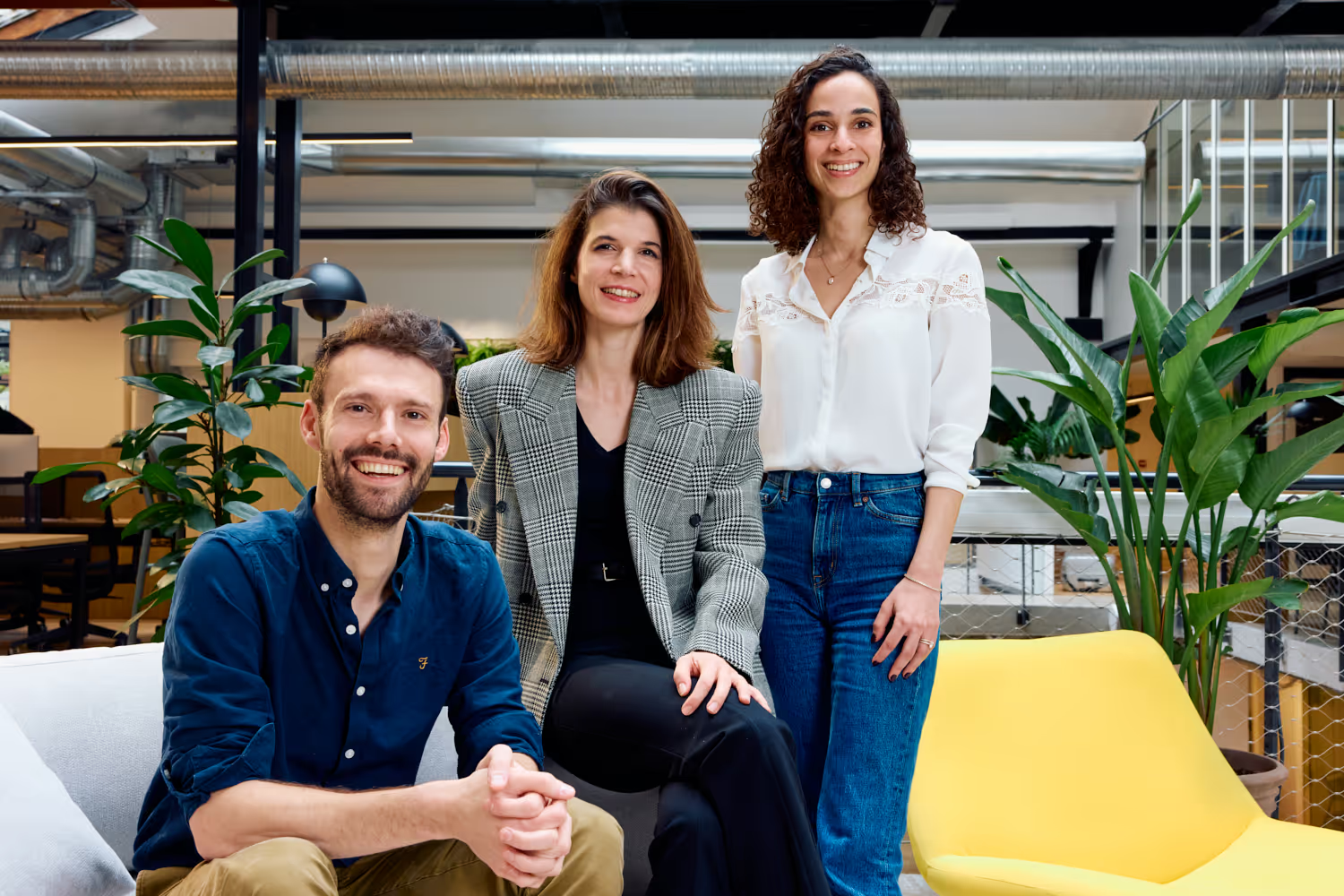
Guillaume Soguet didn't wait for a burnout to address the issue of workplace health. For 14 years, leading Kaï Consulting, a small IT services company he co-founded, he annually seeks ways to improve his employees' experience: better onboarding, a more flexible work environment, and a lasting close connection.
Then one day, a new idea took hold: what if health wasn't just a personal matter? What if the company also had a role to play in ensuring its employees took care of themselves, before something went wrong?
This line of questioning led to a simple initiative: offering each employee an annual health check-up, in partnership with Kor. But at Kaï, as is often the case, they don't do things by halves: before offering it to others, Guillaume tested it himself. And he discovered that sometimes, a simple appointment can be a real wake-up call.
« This isn't an HR benefit, it's a conviction »
Kaï Consulting is moving slowly, but surely. The small IT services company recruits gradually, taking the time to properly welcome, integrate, and do things right. Not out of caution, but by choice: « We wanted each new person to be more than just a number », says Guillaume.
In this culture of controlled growth, the topic of health didn't make a grand entrance. It naturally emerged as the logical continuation of an existing focus. Guillaume is 45, his colleagues ten or fifteen years younger. And with age, a growing awareness: « We anticipate business problems, rarely those related to health », he observes.
As a leader, he feels a responsibility that is increasingly strong. Not to control, but tolead the way. It was with this in mind that he decided to offer his team a health check-up. But not before trying it himself.
Test Before Proposing
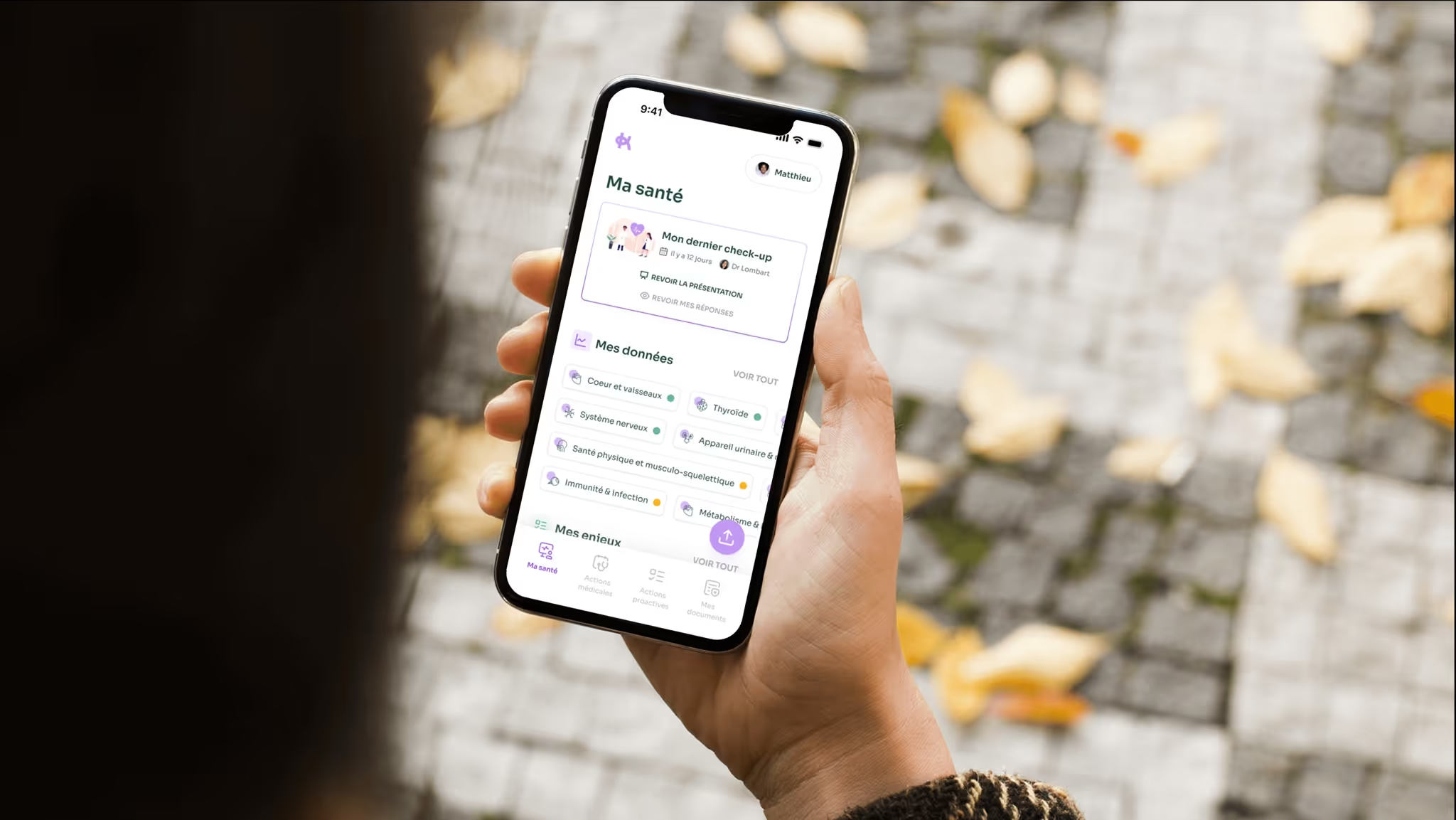
When Guillaume came across Kor, it was initially out of curiosity. He closely follows startups and new approaches to workplace well-being. What he discovered resonated with him: aproactive vision of health, rooted in the long term. Not a gimmick, but a prevention tool. “It’s something we still rarely do: take the time to get a real health check, even when everything seems fine,” he emphasizes.
Before discussing it with his teams, he decided to try the check-up offered by Kor himself. He enjoyed the experience: it was smooth, well-designed, and didn't waste any time. A comprehensive assessment, without anxiety. He mentioned it to his partner, who was more reserved. His partner was convinced, tried it in turn, and also came out transformed. “He had a small epiphany after his health assessment. He got back into sports and lost weight. The assessment wasn't dramatic, but it was enough to kickstart a change,” he recounts.
Meanwhile, Guillaume made an appointment with the ophthalmologist and updated his examinations. The message is clear: health isn't a fixed state to be validated, but a balance to be maintained. And he'd like to make this follow-up a habit. "I like the idea of checking in every year. Not just to know if everything is okay, but to see if what we've put in place has had a concrete effect. It's a way to monitor one's health over time, without waiting for things to go wrong."
An approach offered without obligation
At Kaï Consulting, projects aren't launched with posters or lengthy emails. True to his style, Guillaume offers the check-up to his employees without pressure, "for those who are interested, we'll take care of it,"he clarifies.
The reaction is measured. No refusals, but no overflowing enthusiasm either. "It's always like that when you propose something new; they don't jump for joy, but they play along,"he smiles.
Out of the five employees, four made appointments. Two employees are already having their check-ups, and the initial feedback is good – "plus there's breakfast,"they joke. Small details, but they matter.
What Guillaume aims for is less a revolution than the beginning of a culture. A recurring check-in, a gentle but consistent attention. « Having an annual check-up allows us to see if our efforts are paying off. And if something isn't right, Kor flags it for us. »
No need for speeches. Just a safety net, and a way of saying: we're looking out for you.
What this experience reveals about the leader's role
What Guillaume takes away from this approach is not so much an immediate transformation, but a signal sent, a clear stance. « For employees, it's one less thing to worry about. They know we're taking care of it, so they don't have to think about it themselves. »
What if the real question wasn't about the system itself, but about the role a leader chooses to embrace – or not? Guillaume doesn't hide it: he still too often sees companies waiting for health problems to arise before taking action. Implicitly, he also points to a deeper need. Employees often expect their company to provide a supportive framework, to lead the way, to provide impetus. « We realize they count on us to set benchmarks, to show that certain topics truly matter, » he shares.
Far from being a position of authority or control, it's more a form of presence, of responsibility towards others, in what we choose to prioritize or make visible. Because in a small company, everything is seen, everything is experienced on an individual level. And health, like trust or balance, cannot be delegated.
💡 Like Guillaume, do you want to make health a central topic in your company? Kor supports you every step of the way. ➡️ Discover the approach