What if, at work, health wasn't just something to be addressed when it falters, but cultivated daily ? That's the challenge BNP Paribas took on by launching WeCare, a global program designed to promote well-being and preventive health among its employees.
In a post-COVID context where employee expectations of employers have evolved, the bank wanted to go beyond traditional measures. How? By offering its teams a preventive health assessment. The idea: to foster individual awareness while collecting collective data to better target prevention initiatives.
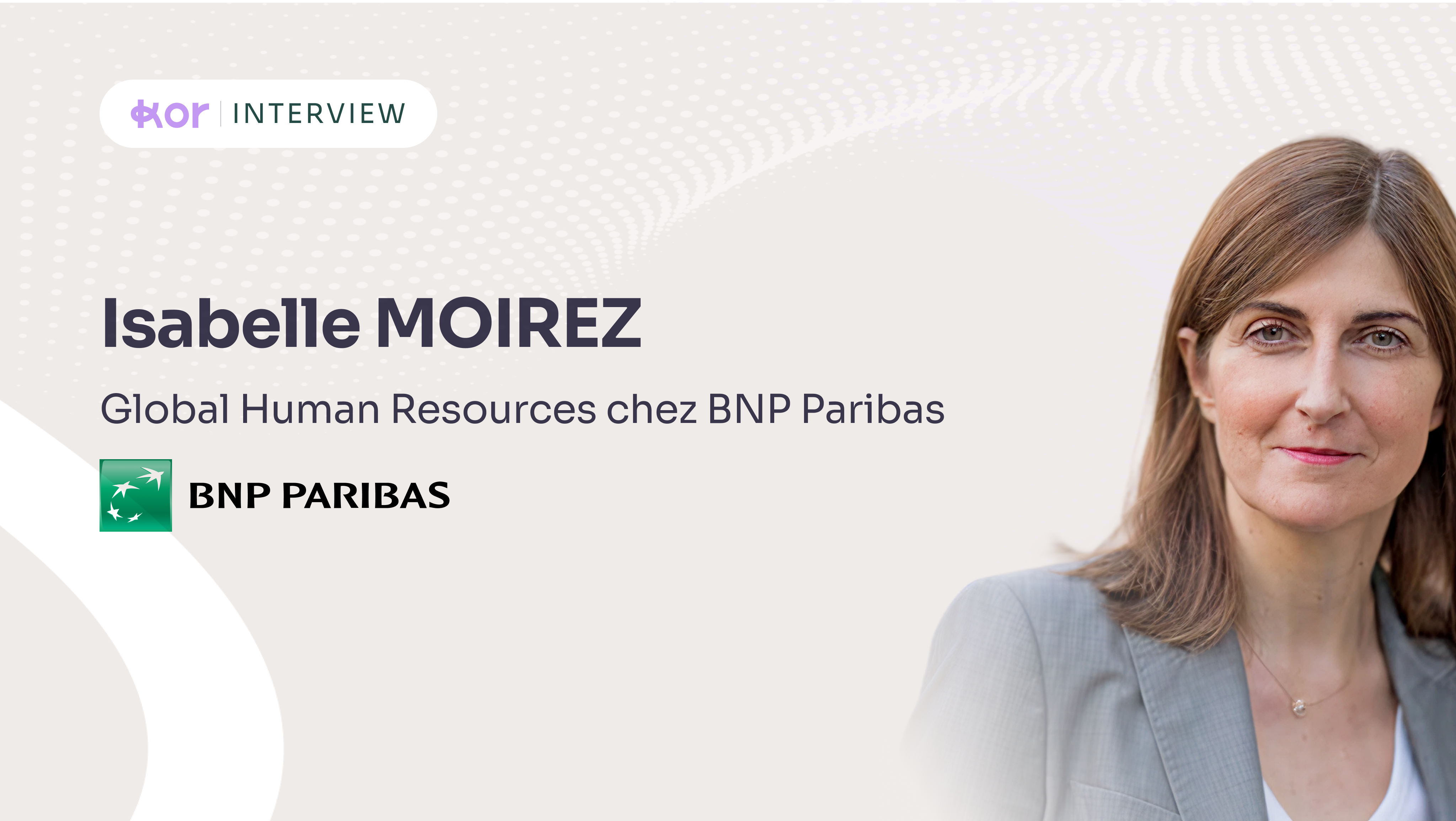
An ambitious project that generated as much support as it did questions. Isabelle Moirez, Global Human Resources at BNP Paribas and director of the WeCareprogram, discusses this initiative that is shaking up habits... and mindsets.
A dual challenge: raising individual awareness and equipping HR
Following the health crisis, a conviction emerged within BNP Paribas: employees expect more than a one-off response to health issues. They want clear, visible, and lasting commitments.
It is in this spirit that the program was created WeCare. Launched at the end of 2022, it brings together all the group's health and well-being initiatives under one banner. Its objective? To structure a clear offering for employees, promote prevention and provide HR teams with tangible tools to take action.
Two global priorities have been set:
👉 mental health, which became a central focus after the COVID shock;
👉 the fight against sedentary lifestyles, a fundamental issue for professions often characterized by office work.
Isabelle Moirez, program director, summarizes its philosophy: “We wanted to create a common framework that provides a global direction, while allowing countries the freedom to adapt or enrich it according to their specific challenges.”
With the launch of WeCare, BNP Paribas HR management set a goal: to go beyond general priorities to better understand the real needs of employees. “Even with established global priorities, we lacked a detailed understanding of the specific issues our employees faced. We needed to better identify where to focus our efforts and what specific actions to implement,”explains Isabelle Moirez.
The chosen solution: a health assessment accessible to all, offered initially to all 55,000 French employees. “The idea wasn't to impose a process, but to open a door for those who wish to engage in monitoring their health,”emphasizes Isabelle Moirez.
A system designed to be simple, educational… and reassuring
The health assessment had to meet several requirements: be accessible to a large number, offer a seamless experience and above all, reassure employees about the use of their health data.
Employees are invited to complete a fifteen-minute program, covering several key health dimensions: sleep, physical activity, stress management, alcohol and tobacco consumption, and medical history. Each step is designed to be both informative and empowering. Practical advice is offered based on the responses, to encourage lifestyle improvements, without judgment or coercion. At the end, the employee receives an educational summary of potential areas for attention, with the option to request a consultation with a healthcare professional.
But beyond the tool, the HR team had to tackle a key challenge: supporting cultural change. For offering a health prevention program also means accepting to encounter some resistance. "We observed caution, sometimes even distrust," notes Isabelle Moirez.
Some employees expressed their fear of sharing personal data, despite guarantees of anonymity. Others hesitated to engage in the process. Finally, some wondered why the company was suddenly concerned about their health, potentially seeing it as a self-serving initiative.
These reactions highlight a twofold challenge:
👉 A need for clear communication and reassurance, to explain the purpose of the initiative and address legitimate concerns about confidentiality.
👉 A cultural shift to establish, because for many, workplace health prevention is still a novelty.
The lower-than-expected participation rate reflects this. But for Isabelle Moirez, it shouldn't be interpreted as a failure: “This is the first time we’ve offered such an initiative on a large scale. It takes time for a new habit to take hold.”
And at Kor?
At Kor, we observe that participation varies significantly depending on the context and the support provided.
On average, it ranges between 20% and 30% for large companies, and can reach 50% to 70% when a dedicated communication strategy is implemented (launch webinar with a doctor, educational materials, internal relays, etc.).
Changing mindsets takes time (and consistency)
For Isabelle Moirez, the main takeaway from this first campaign is clear: evolving occupational health practices requires time, education, and consistency.
The participation rate in the health check-up primarily reflects a cultural reality : many employees are not yet familiar with health prevention as proactive approach. « Some need reassurance, others simply find it hard to take the plunge. But what we're already seeing is that the mere existence of the WeCare program is perceived positively. It's a strong signal that the company cares about their well-being », notes Isabelle Moirez.
The way forward is clear. Next steps?
👉 Build the habit: encourage employees to retake the questionnaire annually, so it becomes a routine personal check-up.
👉 Better tailor collective initiatives: use anonymized data to refine prevention campaigns, going beyond broad generic themes. For example, to understand if stress is linked to workload, lack of recognition, or other specific factors.
The aim is not just to offer a program, but to build a true health culture, where every employee feels empowered in their health journey, supported but never forced.
« Taking care of one's health begins with prevention. And taking care of employees means sustainably fostering collective performance », concludes Isabelle Moirez. BNP Paribas' digital health assessment is more than just a tool: it's a signal. A signal to employees that their well-being matters. A signal to HR teams that prevention can no longer be an option. And a collective learning experience : establishing a health culture doesn't happen overnight. It requires education, transparency, and above all... patience.
And you, where does your health culture stand?
Like BNP Paribas, many companies are wondering: how to move beyond one-off initiatives to build a sustainable health culture?
At Kor, we support organizations that want to make preventive health a concrete driver of engagement and performance.
➡️ Learn how to start or strengthen your approach.



.avif)

.avif)